29 November 2005

TV is Ridiculous


There are only two TV shows that I try to watch on a weekly basis, “The West Wing” (Sunday night at 7) and “ER” (Thursday night at 9). I have never watched prime time TV on Monday and I probably never will again.

I got bored last night so I turned on the TV to NBC, I usually like their shows. I came in part of the way through a show called “Surface,” a sci-fi show about aliens or something. I had seen previews for it, and even though I’m not usually in to alien shows I decided to give it a try. It was really…really weird. Two people floating on a raft in the ocean in a pile of alien eggs, little green dragon looking things, (maybe the aliens?) running around in suburban homes, and a boy in the hospital with a bad bite on his leg who says it wasn’t the little dragon dudes who bit him and is apparently some how connected with them. Slightly intriguing but I don’t think I’ll be tuning in next week.

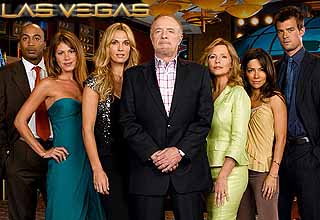
The next show on was “Las Vegas.” Usually I jump to find the remote to turn off the TV as soon as I hear anything about this show, but last night I figured that as long as I was watching mediocre TV I would check this one out too. The show started with some woman (the owner of the casino, I found out later) getting blown off a roof…by a strong gust of wind I guess? Although most of the characters were shocked at her death, none of them were sad. Apparently no one liked her. When the other hotel higher-ups found out that she had left the casino to a charity (The Foundation For the Blind) one of them said, “Maybe we were all wrong about her,” and another replied, “Or maybe she was just a total bitch.” I assume that the meanness of the characters, and their apparent apathy about her death was supposed to be funny, but I thought it was totally ridiculous. Also ridiculous was the ease in how the management and ownership of the casino was handed after her death. In the show, one of the higher-ups (I don’t know any character names) convinced the blind representative of Foundation for the Blind that the charity would be better off selling him the casino, so he did. Then the positions that the now deceased owner had recently switched were switched back. I don’t know much about the way casino buying deals go down, but it seems to me that more care would be taken in a multi billion-dollar sale than was portrayed in the show.

I also watched “Medium,” which I really want to hate, because I don’t like the premise of the show, (giving hope to people with missing children that a psychic might be able to help them) but I end up kind of liking it anyway, so I won’t go into detail about how ridiculous it is.

All of the shows on Monday night were about things that the people watching will (most likely?) never experience; alien invasions, glamorous and disgustingly rich Las Vegas life, and psychics solving their problems. It seems that the writers of the shows are trying to help the average person escape from their mundane life, if for just an hour, though in my opinion are doing a less-than-average job at it.

21 November 2005

My Step-Dad’s Not Mean, He’s Just Adjusting


If you read Christine’s blog, you know that the two of us spent most of the day trying to avoid working on our essays. What she didn’t tell you is that she was sitting in my room while she was writing that blog while I worked on my essay and we watched “Death to Smoochy.” It’s a great movie that shows how corrupt the children’s entertainment industry is.

Robin Williams plays the disgraced children’s entertainer Rainbow Randolph. He is found to be taking money from parents so that their kids can dance on his show and sit in the rainbow chair. This is freakish because I can just imagine how truthful it is. How cutthroat to you think the parents were whose lovable children were on “Barney and Friends” or “Lamb Chop’s Play-Along?”

After Rainbow Randolph leaves the kids network has to get a new squeaky-clean replacement. Enter: Smoochy the Rhino. Shelton Mopes, who plays Smoochy, is a vegan; gun-hating, clean-cut musician who plays guitar for heroin addicts at a methadone clinic and loves his wheat grass. Although the character is exaggerated I think this is just the kind of guy who America needs running its children’s entertainment, especially on TV. Mopes actually cares about kids, not the money he gets from performing for them. He’s horrified at the thought of telling kids to eat refined sugar loaded cookies. He prefers to tell them about snacks “sweetened with juice for an energy boost.”

This brings me to real-life kid’s entertainment. If you turn on a TV channel geared towards kids today the first thing you’ll notice it tons of commercials. We spent a lot of time talking about the effect of the media on kids in my Intro to Mass Communication class. A video we watched showed how both TV show programmers and ad agencies hire psychologists to tell them what will get kids to watch, and keep watching. It turns out that kids under about five years old can’t tell the difference between when a show stops and the commercials begin. In commercials geared towards kid’s adults are almost always shown as mean and stupid people who can’t possibly understand children. They are mean because they won’t give the kids what they want. The good parent is the one who lets their child stay up later, and gives them the product being sold.

If Smoochy ruled the airwaves of kid’s programming this would not happen. Shows would be educational and entertaining for kids. They would not be mindless entertainment filled with violence and unhealthy foods. Kids on Smoochy’s show are encouraged to dance and run around during the show, very much unlike most shows that hypnotize kids into watching for hours as they sit on their ever-growing larger bums.

So remember kids, a step dad is a lot like a new puppy. They need patience and love while they adjust to their new surroundings. But remember - if he is ever abusive to you or mommy, what are the magic numbers?

18 November 2005

I thought this was kind of a weird topic. Write about my experiences with a minority group? Like: I knew this Hispanic guy once. He had a sweet car. Like that?

I thought about writing about how in Envi Club and Young Democrats last year we always had our weekend events on Sundays. This was because the majority of both clubs were Jewish, so Saturday was off limits. But that is actually all I could think of about my experience with Jewish people, (besides Fiddler on the Roof last year, which was amazing but an entirely different group of people… and I’ve been to a few Bat- and Bar-Mitzvahs).

So while sitting here thinking of my experiences with minority groups I thought, “hey, some of my best friends are minorities!….cool.” I feel weird about writing about them, but I’ll try.

Ruben Palacios grew up in South Central, Los Angelis. His parents are from Mexico. I met him in my freshman science class when he would sit by me and try to copy my homework at the last minute before the teacher came by to stamp it. I didn’t really like him at first because he’s one of those people who will babble on incessantly whether they think you care or not. I was in science with Ruben again when we took biology sophomore year. In that class we became better friends. He thought I was amusing because I called him Ruben and everyone else called him Ru. We sat next to each other and could commiserate over Ms. Schat’s ridiculous tests and massive amounts of homework. Although he had trouble his freshman year, he was determined to work hard and get good grades this year. That class was one of the hardest classes I took in high school and although I was a bit resentful at the time, I’m happy now to say that Ruben got a better grade than me.

The science theme was repeated again in the second semester of my junior year when we were both in an Environmental science class. Through all of these classes Ruban continued to talk…and talk…and talk. Amid all the small talk, he would tell me stories about when he lived in LA. About how he was in a gang, how he had to take care of his younger brother when his mom wasn’t around. He told me once that one night while he was watching TV a drunk man came into the front door of their house, shot his dog in the head and ran out the back. His storied were shocking to me, but he explained that for him it was just growing up. Although I didn’t have any classes with him my senior year I saw a lot of Ruben because he dated another one of my friends. I worried about him a lot. He was still taking care of his brother and lived in an apartment complex known for nightly visits by the police. I’m sad to say I haven’t talked to him since the end of school last year, but I’m happy that he graduated with my class. I know he realizes that he’s lucky to have gotten out of the area he grew up in, and that he’ll make the most of his life.
-----------------

Isabelle Shankar has been one of my best friends since second grade. I vaguely remember her first day of school in America. She sat a few seats down from me in our second grade classroom and I could hear her dad speaking a language I’d never heard before in an oddly quiet and gentle voice. From then to know it’s almost all a blur, but in that blur I learned many things. That language I heard was Swedish. Isabelle’s dad is from India, her mom from Poland. They met in college in England, moved to Sweden where they had three kids and then moved everyone to the US because they wanted them to grow up there. I don’t remember how I found all this out, because we never really talked about it.

The Shankar’s story seems a bit like the typical immigrant story. They came here for a better life and worked their way up. One of my most vivid memories of Isabelle from elementary school is of her wishing on fluffy, white dandelions that the bank would approve a loan so her parents could finally buy their house instead of renting. Now that all three of their kids have graduated college or are currently there, the Shankar’s are back in an apartment, this time only temporarily while the house they bought years ago is being remodeled.

I always felt welcome at Isabelle’s house. Both of her parents were always eager to make guests feel at home, usually by cooking food, (oooh delicious food). They also made you feel like a part of their family. Isabelle’s mom would constantly ask us about how school was going, how our families were, and if you ran into her at the bakery in the grocery store where you worked she’d ask you why you hadn’t been around as much lately.

Growing up half Indian, half Polish, in a household with a devout Catholic and a practicing Hindu didn’t make Isabelle as different as people might think when they first hear that. She told me one time that she sometimes wished she could be more European, like her cousins, but is most definitely, in her words, “All American.”
-----------------
My friend Rian would like to say that he is also in a minority, “I'm a pale, skinny, effeminate, Irish-Swedish Latinist! Go me/us!” So, there you go. (That's him in the picture).

16 November 2005

Social Life on K2

The girl’s side of the second floor in Knowles hall is pretty much silent by 11pm every night, including weekends. Before that people go to dinner in groups of two or three, or sometimes nearly the whole hall. Later many people go to some kind of school-sponsored event, a movie or club meeting, are playing in a ping-pong tourney in the basement, or are huddled in their room doing homework. A few people seem to spend all night studying in the study lounge. About half the hallway spend every waking moment together, and the other half lead their own lives. For some reasons there aren’t dramas in the hall, and floor snacks can turn into hour-long chats, catching up with people we haven’t talked to in a while.

At the beginning of the year everyone kept their door open almost constantly. Everyone seemed to be desperate to meet new people. People that weren’t as shy invited the more shy people to their rooms for movies. Slowly, bonds grew stronger. Most people noticed that a few people seemed to immediately become best friends. “Isn’t it so cool how they just clicked,” said one person over a game of Pictionary. Everyone agreed that it was, but then another girl pointed out how at that moment everyone else was wondering when they’d meet their “click friend.”

While now, more doors are closed more often; people are still very friendly on second floor, Knowles. You’ll always have someone to go to dinner with one night, or a group to go camping with all weekend. The social scene here can seem a bit cliquish at times, but under that surface are some genuinely friendly people.
---------------------------

I know the assignment was to write about the social scene at UM in general, but that just seemed like too huge of a topic to tackle for me, and I saw that everyone else had written about parties and drinking which was also the only thing I could think of. So... I wrote about something I knew more about instead.

10 November 2005

Why the DHC at UM in Missoula, MT?

About once a week I find myself thinking, “Why DID I come here?” I like Missoula, it’s sort of like a mini, less liberal, Portland with an OK public transportation system, but it’s definitely not like home. Montana is far away from any beach, which is a negative. UM is a fairly big school, which I was not planning on when I first set out on my college search. Then I remember, “Oh, yes. UM gave me the most money and was the cheapest! And the journalism program is pretty sweet too.” Don’t get me wrong I really like it here. I love the majority of my classes, I have met fabulous people, and I’ve had some good times with them.

The small classes in the DHC are wonderful. I’m used to small classes and I don’t like the lecture classes with little or no interaction. The professors I’ve had in my honors classes are how I imagined college professors to be when I was younger. They are great. The main reason I like the DHC is the people I have met, and have classes with. I love taking honors classes not because I think I’m too smart for other classes but because I love the interaction with the people in them. It’s why I took IB classes in high school and also why I applied to the DHC. I knew I would be around people who not only wanted to be in college, but wanted to get as much as they possibly could out of the experience.

My hopes for lively academic interaction have been fulfilled in my honors classes. The heated arguments in ENEX101, deep discussions in Ways of Knowing, and guessing what answer Deitrich is thinking of in Humanities have all been done in a way that I don’t think we could have done in regular classes. Being together all of the time in the FIG is helps these conversations. But I think the simple fact that we all signed up for the FIG, and did the work to get into the honors college is the reason they are so good.

05 November 2005

Melissa's Rant

I really appreciated Melissa’s rant. Mostly because I do some of the things she talked about, also because I knew a lot of people like she describes herself as in high school. I was probably one of the people she laughed at, maybe even was annoyed at. I agree with her that it is not good that students think about their grades more than their well being. Often, last year I would save the hardest work, history reading (and the notes we were supposed to take on it) for last. Much to my history teacher’s annoyance I often wouldn’t get it all done, preferring to be at least somewhat alert for the 7:45AM class.

I share Melissa’s doubt when I see how much more homework I’m doing than many other people in my hallway. Just a few days ago when leaving an Intro to Mass Communication lecture about our final essays I heard someone say, “This will be so easy. It’s the third essay I’ve written this year!” I about turned around and screamed “I wrote three essays last week!” I managed to restrain myself…that time.

Melissa’s rant could probably be more focused. She asks what she’s ranting about herself. Although, I don’t know if when she says, her own stupidity, I agree. It seems to be more about how skewed many people’s expectations of high school and college students are, with some personal stories of being over worked, and not having enough sleep thrown in. The way she wrote it is effective, at least for me, because I could identify with her frustrations.

31 October 2005

MRS. = MR’S.


Nasty Little Brats:
A (semi) Rant In response to Maureen Dowd article for “The New York Times, “What’s A Modern Girl To Do?”
(http://www.nytimes.com/2005/10/30/magazine/30feminism.html?ex=1288324800&en=197a1142bf2ba967&ei=5088&partner=rssnyt&emc=rss)

Most people misunderstand what feminism is about. The true definition of a feminist is someone who believes that women should be treated equally to men. A feminist can be a woman or a man, hetero or homosexual, and any race or religion. Not understanding this is what might be fueling what could be called a backlash to feminism. Nasty little brats who take what their mothers and grandmothers went though for granted are the women who are leading this backlash. Even though they take full advantage of many of the things these women got for them they don’t understand them.

In one part of Dowd’s article she talks about how women today use the dinner check as a way of testing whether a man is worth a second date. When the check comes they offer to pay, fully expecting of course that he’ll decline her offer and ante-up. As one woman said, “If you offer, and they accept, then it's over." That pisses me off quite a bit. She is taking what feminists in the 60s and 70s gave her the ability to do, have money to pay for her own meal, and using it as bait to get him to pay anyway. I think we all have to admit to hoping that someone else would pay when we’ve been out, but offering to pay and then getting angry when the other person accepts is just dishonest.

Feminists in the 70s worked hard to have it all: a rewarding relationship, a career, and a family. Women today seem to be throwing that away. Sure there are examples of where that contributed to problems within the family, but it is definitely not the only thing that was hurting them. In many cases the problem was probably more the man’s fault, expecting the women to bring in half the income and fulfill the womanly duties of cooking and cleaning.

Maybe my views have to do with my upbringing. My mother’s name is Janet Dougherty-Smith. She works full time. She doesn’t cook unless she feels like making some crock-pot surprise and usually cleans on the weekend. She brings in probably 90 percent of our family’s income. My dad cooks dinner for our family every night, does laundry and vacuums, and runs a stained glass business out of our house. Yet somehow my parents have an equal relationship.

---------------------------------------


I think I need to change some stuff in this. It isn’t very rant-like, and sort of wanders around. I will work on it and update it later. Writing is hard work. Also I'm not saying the girl in the cartoon is a nasty little brat. Her predicament is all too true.

28 October 2005

Recycle Or Else

Throwing something away that can be recycled should be illegal. We have the resources to recycle many things; paper, glass, plastic, metal. Recycling reduces the waste that goes into landfills and the amount of new material that needs to be produced. Many people don’t recycle because they are lazy. Being fined for not recycling would deter this laziness.

People would not be alone in this national effort to improve the lives of everyone. There would be a recycle pick up \ every week, just like the garbage pick up. Recycle bins would be placed in public places just as frequently, if not more than garbage cans. Recycle receptacles would be attractive too, not those giant ugly blue or red bins that you see now.

People who purchase things made out of recycled material would be rewarded because those things would cost less. The higher the recycled content percentage, the bigger the discount would be. Imagine the pride one would feel in recycling cans one day, and buying paperclips made out of those cans the next.

More recycling would mean less trash in landfills. Smaller landfills mean cleaner environments, and a clean place to live makes everyone happy.

25 October 2005

It takes gall...

Editorial
Hiding Behind Katrina
Published: October 21, 2005
NY Times

"It takes gall to use Hurricane Katrina as cover to undermine the democratic process, but that's what conservative ideologues are attempting in the House. Among their budget-cutting proposals - being sold as "tough choices" for America to pay for the Gulf Coast recovery - is a startling plan to kill public financing in the presidential election system.

That program, financed by $3 checkoffs volunteered by taxpayers on their returns, has been a bulwark of presidential elections. It was enacted about 30 years ago, after the Watergate scandal exposed the big-money bagmen corrupting the heart of the political process. It makes politics more competitive for underdogs, more involving for the public and less reliant on floods of special-interest campaign money.

Congress should indeed turn its attention to the program - not to end it, but to repair its outdated limits. The primary calendar has become so front-loaded that the candidates with the strongest sources of private donations are now choosing to skip the limitations of public financing so they can spend early and furiously, leaving other challengers at a disadvantage.

The primary subsidy formula needs to be made more realistic to level the field, and the checkoff amount should be increased. Candidates should not be allowed to have it both ways by feeding on private money in the primaries, then switching to public money in the general election, as President Bush and Senator John Kerry did last year.

Under the current system, participating candidates in the primaries receive matching funds for the first $250 of each private contribution. This one-to-one formula should be increased to two-to-one matching or more as a way to invite more of the small donations that began showing up impressively last year from Internet users.

Sponsors of the House proposal must know they are wrong because they are trying to tuck the change into a budget bill without a public hearing and debate. If they want budget cuts, they should focus on government waste, not open elections."

The author of this editorial is saying that the conservatives are going about budget cutting in the wrong way, and dishonestly. The way they start out is effective because it’s something that everyone can agree on, “It takes gall to use Hurricane Katrina as cover to undermine the democratic process.” They then explain what it is that’s the conservatives are trying to change. This argument is not saying that the public funding of the presidential should not be changed, just changed in a completely different way than the conservatives want to.

The writer explains pretty well why his idea is better than the conservative one. They say that we need the public funding to avoid corruption, and the level the playing field for candidates. Those are both things I think most people would agree with. Using common sense to explain your argument seems to be helpful in getting people to at least see your side, if not getting them to agree with you. The writer also seems to be trying not to take sides. They point out that both Bush and Kerry used a strategy for raising money that the writer disagrees with. If they were trying to say that the liberals were always right they would have left out Kerry.

I think the last paragraph is very effective. It is using a fact, that there are no public hearings about this subject, to say that the conservatives will know that people won’t like their idea. The writer says they “must know they are wrong.” This is a good point, in my opinion, and helps steer readers toward agreeing with the writer.

24 October 2005

Go Bridget Go

Bridget’s argument for Title IX was very well thought out. First she gave examples how the United States has worked to end discrimination. She told how Title IX also works against discrimination. Talking about the “three prongs” was effective. A lot of people probably assume that it is hard for schools to comply with Title IX, but when she showed that they only needed to meet one of those standards she showed how simple it was.

Another thing that worked in her argument was showing the other things Title IX does outside of sports. While some people might not care about sports, they will most likely react to something about sexual harassment. I think everyone would agree with her that there should be something in place to prevent it.

Bridget seems to assume some things in her last paragraph. She says that without Title IX gender discrimination would have continued. While this might be true, there is nothing that backs this statement up, showing that Title IX is the only thing preventing gender discrimination today.

I think the argument would have been more effective if she had said exactly what Title IX did, maybe by quoting it. Her thesis, that Title IX only helps, and does not hurt colleges, comes across very well. Bridget seems to care a lot about this subject, and that also comes across in the writing.